
Filming a Person’s Private Parts in NSW
Section 91L Crimes Act 1900 (NSW)
Secretly filming a person’s private parts is not a prank and not a misunderstanding. NSW law treats this conduct as a serious sexual offence. As phones, smart devices, and hidden cameras become easier to use, police charge this offence more often. Therefore, anyone facing an allegation under section 91L of the Crimes Act 1900 (NSW) must seek professional advice to understand the consequences and possible defences available to them.
The Law in NSW
Section 91L of the Crimes Act 1900 (NSW) provides:
“(1) General offence A person who, for the purpose of obtaining, or enabling another person to obtain, sexual arousal or sexual gratification, films another person’s private parts, in circumstances in which a reasonable person would reasonably expect the person’s private parts could not be filmed–
(a) without the consent of the person being filmed to being filmed for that purpose, and
(b) knowing that the person being filmed does not consent to being filmed for that purpose, is guilty of an offence.”
The law imposes a maximum penalty of 2 years imprisonment or 100 penalty units, or both.
What counts as “private parts”
Section 91K defines private parts. This definition includes a person’s genital area, anal area , whether bare of covered by underwear or, for a female or transgender person identifying as female, the breasts. Consequently, even brief or momentary filming can trigger criminal liability.
What the prosecution must prove
To secure a conviction, the prosecution must prove each element beyond reasonable doubt.
First, the prosecution must prove that the accused filmed another person.
Second, the prosecution must prove that the recording captured the person’s private parts.
Third, the prosecution must prove that the accused acted without the person’s consent.
Fourth, filming was to obtain sexual arousal or sexual gratification.
Fifth, the prosecution must prove that the accused acted intentionally.
Sixth, the prosecution must prove that the filming occurred in circumstances where a reasonable person would expect privacy.
Therefore, accidental recordings or footage taken in clearly open and public circumstances may not satisfy the offence.
Standard of proof
The prosecution must prove every element of the offence beyond reasonable doubt. As the High Court confirmed in Pell v The Queen (2020) 268 CLR 123, a court must acquit if the evidence leaves open a rational hypothesis consistent with innocence. Accordingly, unclear footage, alternative explanations, or unreliable witnesses can dismantle the prosecution case.
Possible defences
Several defences commonly arise in section 91L cases.
First, lack of intention defeats the charge where the recording occurred accidentally.
Second, consent defeats the charge where reliable evidence supports it.
Third, absence of a reasonable expectation of privacy defeats the charge in appropriate factual settings.
Therefore, early legal advice often decides whether the case proceeds or collapses.
Why this offence matters ?
This offence exposes an accused person to prison and long-term reputational damage.
Moreover, police often combine this charge with other sexual or technology related offences.
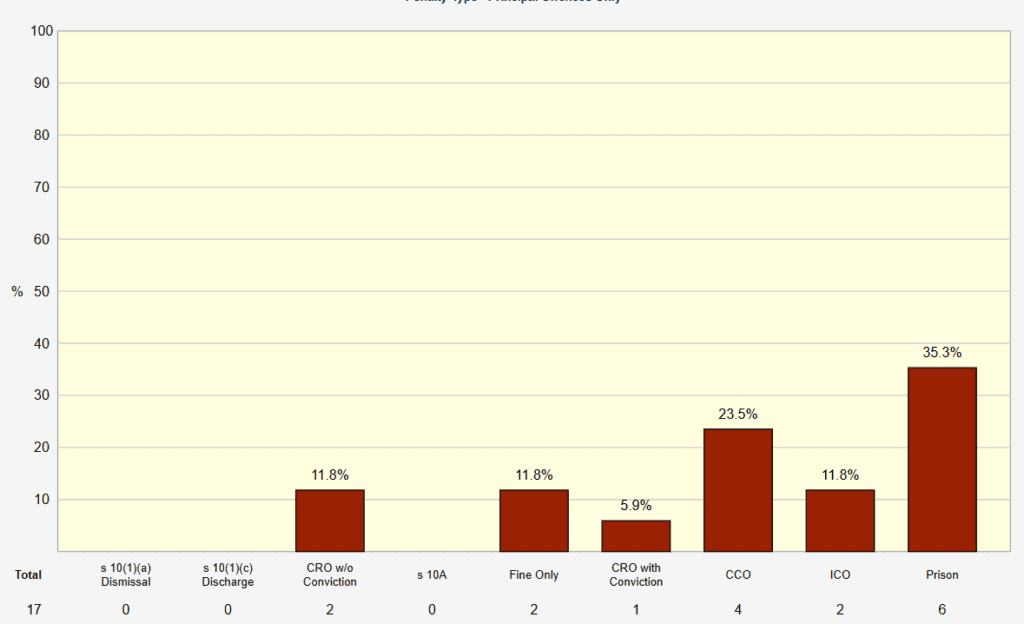
As a result, delay, panic, or poor advice can turn a defensible case into a permanent criminal record. There were 17 recorded cases of section 91L of the Crimes Act 1900 (NSW) in the Local Court of NSW between July 2021 to June 2025 as of October 2025. The below shows how the Local Court of NSW dealt with those cases:
Speak to a criminal lawyer now
If police has charged you of filming a person’s private parts, you need experienced criminal defence lawyers immediately. Pannu Lawyers consistently ranks as the best criminal lawyers in Blacktown for serious criminal matters. We act early, attack weak evidence, and give blunt advice about risks and outcomes. Contact Pannu Lawyers today before one wrong move makes the situation worse.