
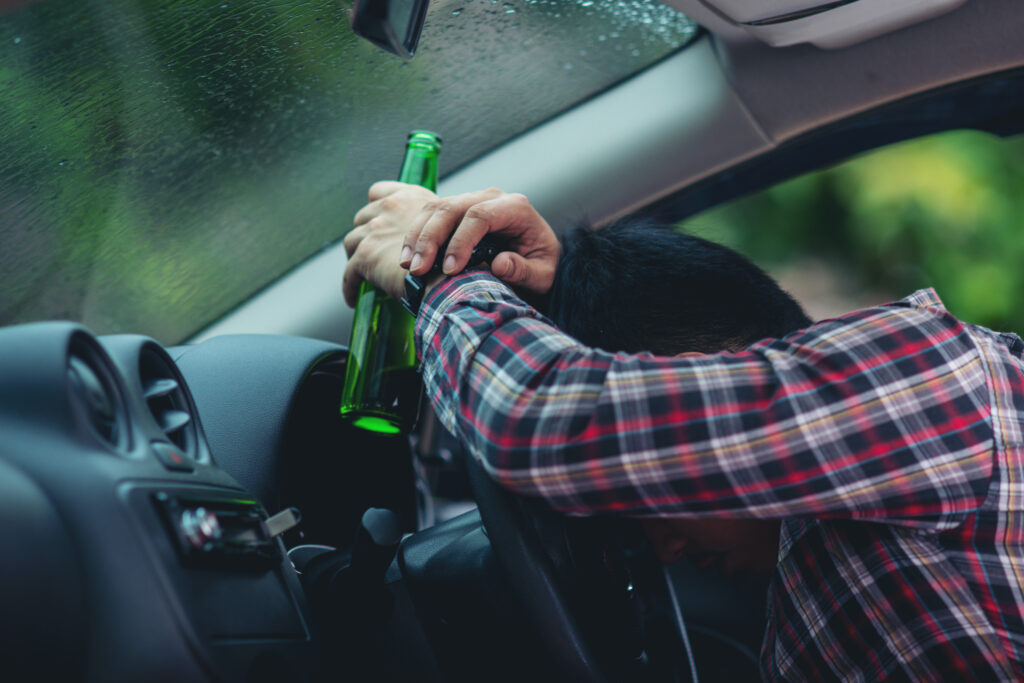
High Range Drink Driving in NSW
High range drink driving is one of the most serious traffic offences in New South Wales. It is not treated as a minor lapse in judgment. Courts treat it as conduct that creates a real and immediate risk to the public. A reading of 0.15 or above places an offender in the highest drink driving category under the law. The consequences are severe including long licence disqualification, mandatory interlock conditions, heavy fines, and imprisonment are all firmly on the table, even for first offenders. Case law makes it clear that sympathy runs thin in these matters.
The Law
“High range prescribed concentration of alcohol means a concentration of 0.15 grams or more of alcohol in 210 litres of breath or 100 millilitres of blood. “
This definition comes from the Road Transport Act 2013 (NSW) and leaves no room for argument. At 0.15 or above, the offence is automatically high range.
The offence
A person must not, while there is present in the person’s breath or blood the high range prescribed concentration of alcohol:
- Drive a motor vehicle, or
- Occupy the driving seat of a motor vehicle and attempt to put the motor vehicle in motion, or
- If holding a full licence, sit next to a learner driver who is driving the vehicle.
Maximum penalties
For a first offence, the maximum penalty is:
- 30 penalty units, or
- Imprisonment for 18 months, or
- Both.
For a second or subsequent offence, the maximum penalty increases to:
- 50 penalty units, or
- Imprisonment for 2 years, or
- Both.
Maximum penalties are the guiding post for the magistrates in Local Court. They frame how seriously a magistrate is required to approach the offence.
Licence disqualification
High range drink driving carries an automatic licence disqualification unless the court ordersotherwise. In practice, this means years, not months. The court can reduce the disqualification, but only within strict statutory limits. Losing your licence is not a side issue.
It is one of the primary punishments.
Interlock orders
High range drink driving is an alcohol related major offence. That triggers the interlock regime. Depending on your history, the court may impose:
- A minimum interlock participation period of 24 months, or
- A minimum of 48 months if there is another relevant offence within five years.
You cannot drive without an interlock licence during this period. No interlock means no driving, full stop.
What the Prosecution Must Prove ?
To secure a conviction for high range PCA, the prosecution must prove each element beyond reasonable doubt.
- You drove a motor vehicle, attempted to put it in motion, or sat next to a learner driver as defined by the Act.
- At the relevant time, alcohol was present in your breath or blood at a concentration of 0.15 or higher.
- The breath or blood analysis is legally admissible and properly linked to you.
If the prosecution fails on any one element, the charge fails.
Standard of Proof
The prosecution bears the burden of proof. Every element must be proven beyond reasonable doubt. If the evidence, taken as a whole, leaves a reasonable doubt, the court must acquit.
This principle is confirmed by the High Court of Australia in Pell v The Queen (2020) 268 CLR 123.
Possible Defences
High range drink driving cases are rarely about emotional explanations. They are evidence cases.
Real defences include:
- Police cannot prove you were driving or attempting to drive.
- The breath or blood analysis is unreliable or inadmissible due to procedural failures.
- The prosecution cannot link the reading to the alleged time of driving.
- Identity is not properly established.
- The court is not satisfied beyond reasonable doubt that the reading reached high range and convicts of a lesser PCA category instead.
What does not work:
- Saying you felt fine.
- Saying you normally drink more than that.
- Saying you needed to drive home.
The law expressly blocks those arguments as High Range Drink Driving is strict liability offence.
Sentencing Reality and the Guideline Judgement
The NSW Court of Criminal Appeal guideline judgment on high range PCA remains binding.Magistrates must apply its reasoning when assessing seriousness and penalty.
The “ordinary case”
An ordinary high range PCA case often includes:
- Detection by random breath test.
- Driving for convenience.
- No accident.
- A prior good record.
- An early guilty plea.
Even in an ordinary case, courts rarely deals with this offence under Section 10 of the Crimes Sentencing Procedure Act 1999 (NSW).
What usually happens
- Section 10 outcomes are uncommon.
- Full automatic disqualification is often imposed.
- Employment hardship alone rarely justifies a reduction unless the impact is extreme and proven.
Aggravating features
Courts treat the offence as more serious where there is:
- A reading well above 0.15.
- Erratic or dangerous driving.
- A collision or near miss.
- Passengers in the vehicle.
- A prior high range offence.
Where multiple aggravating factors exist, imprisonment becomes a real risk, not a theoretical one.
What This Means for You
High range drink driving is not a technical offence. It carries long term consequences that follow you well beyond court. Some cases can be defended. Others can be reduced. Many require careful damage control to limit disqualification, interlock impact, and the risk of jail.
The difference between outcomes usually comes down to early advice and how the evidence is handled. If you are charged with high range drink driving, speak to Pannu Lawyers. We are the Best Criminal Lawyers in Sydney. We give straight advice, realistic assessments, and clear strategies to get the best possible result.